☎︎ +1 760 585 9393
The Great Menopause Reckoning Is Here

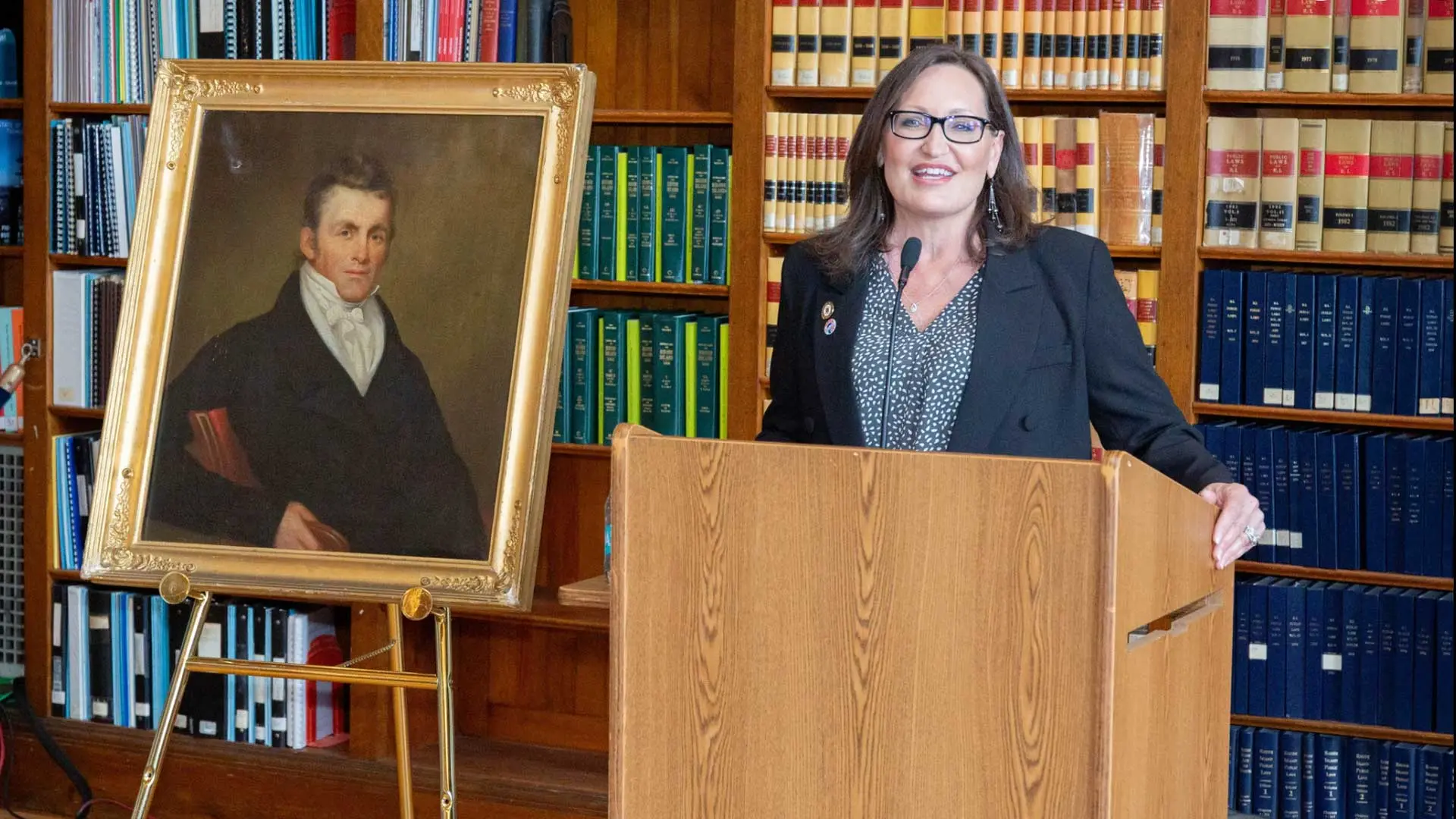
TL;DR Menopause legislation is sweeping the country. 18 states are legislating menopause in the workplace. That number was in the single digits two years ago. Your most experienced women are in the middle of a menopausal transition. The organizations that prepare now will have a competitive advantage. The reckoning is here — the only question is whether your organization is ready.
On March 18th, 2026, the Menopause Education Center founded by Rachel Anne held a Linkedin live session called: Women’s History in the Making: Lawmakers Advancing Menopause Rights. The session was moderated by Senator Lori Urso (RI), who sponsored the nation’s first menopause employment discrimination law. Panelists included lawmakers from Illinois, Virginia, Massachusetts, and Philadelphia who are actively advancing menopause workplace legislation across the country.
The Debt That Is Now Coming Due
For decades, the medical establishment underserved women at midlife. Physicians received one to four hours of menopause education across their entire training for a transition that spans one third of a woman’s life. Women were told their frozen shoulders, their cognitive fog, their mood disruptions, their hearing loss were just aging. They were handed tissues, sent home, and expected to manage quietly.
The story goes back further than that. In 1991, the Women’s Health Initiative study triggered a mass retreat from hormone therapy that left an entire generation of physicians afraid to treat and an entire generation of women undertreated. The science has since been substantially corrected. The black box warning on HRT has been removed. Most doctors still don’t know that and neither do most women.
That is the debt that is now coming due.
The Women Who Are Ending the Silence
It started in Rhode Island. In June 2025, Senator Lori Urso made history when Rhode Island became the first state in the nation to enact menopause-specific workplace protections under its fair employment practices law. What she and Representative Karen Alzate built in Rhode Island has since become a template, and a model, for legislators across the country.
In Philadelphia, City Council Member Dr. Nina Ahmed passed an ordinance prohibiting workplace discrimination related to menopause, perimenopause, and menstruation, and requiring employers to provide reasonable accommodations. Philadelphia became the first municipality in the country to do so. The mayor, the city’s first female mayor in 100 years, the first Black woman to lead Philadelphia, signed it promptly.
In Virginia, Senator Stella Pekarsky and Delegate Kathy Tran introduced companion bills to expand the Virginia Human Rights Act to explicitly cover menopause and perimenopause in employment, public accommodations, and government programs. Both bills passed the legislature in March 2026 and are headed to the governor. Delegate Tran described standing in subcommittee and listing every symptom, including vaginal dryness, out loud, for the first time in that chamber’s history. Her colleagues on both sides of the aisle knew exactly what she was talking about.
In Illinois, Senator Adriane Johnson is sponsoring the Menstrual Health Workplace Equity Act, establishing paid leave protections for employees with debilitating menopause-related conditions. A companion bill she developed with Lieutenant Governor Juliana Stratton, allowing healthcare professionals to count menopause and perimenopause education toward their implicit bias continuing education requirement, passed out of committee unanimously.
In Massachusetts, Representative Marjorie Decker and Representative Joan Meschino have combined their bills into comprehensive legislation requiring the state Department of Public Health to develop a continuing medical education course on menopause, mandating that multiple categories of providers, not just OBGYNs, complete it, establishing legal workplace protections modeled on Rhode Island’s law, addressing insurance coverage equity for all forms of hormone therapy, and creating a commission intentionally designed to center the voices and experiences of women of color.
These are elected officials, standing in chambers where the word menopause had never been spoken before, making it law.
Meet the Generation That Will Not Be Quiet
This is what happens when Gen X reaches positions of power.
Gen X women, the most educated, most credentialed, most economically productive generation of women in history, are now moving through perimenopause and menopause in mass numbers. And they are not their mothers.
They did not come this far, through glass ceilings, double shifts, and decades of being told to work twice as hard for half the credit, to disappear at the height of their careers because no one had the foresight to ask why their best women were struggling and leaving.
Representative Decker put it plainly: her generation is not going to suffer silently the way women before them did. They are going to make everyone else part of this conversation. Senator Pekarsky noted that once she started discussing menopause legislation, everyone had a story and everyone was willing to talk. The silence was never because women had nothing to say. It was because no one had created the conditions for them to say it.
Those conditions now exist and the conversation is moving fast.
This Is Now a Corporate Governance Issue
The women moving through menopause right now are not entry level. They are your senior directors, your regional VPs, your managing partners, your department heads. They carry institutional knowledge that cannot be recruited. They represent a talent investment that took twenty years to build.
And they are leaving.
They are leaving because the conditions that would allow them to stay, accommodations as simple as flexible scheduling, temperature control, a conversation with a physician who actually knows what to do, have never been systematically offered.
Council Member Ahmed described a telling pattern in her research: women appearing on performance improvement plans at disproportionate rates, for the same reasons their male colleagues are not flagged at all. Cognitive disruption. Fatigue. Inconsistent performance during a hormonally turbulent transition that no one named, no one treated, and no one connected to what was happening biologically. She also noted that one of the most effective accommodations her office implemented cost nothing: moving an employee’s desk closer to the air conditioning unit so she could manage her own temperature.
Instead of being an employee welfare issue, this is a performance management issue with a clinical explanation and a practical solution.
18 state legislatures have decided the status quo is no longer acceptable. They are asking for workplace discrimination protections, mandatory accommodations, provider education requirements, and paid leave provisions. The legislative infrastructure is being built whether corporate America is ready or not.
The companies that get ahead of this will retain their most experienced women and lead with a measurable competitive advantage. The ones that wait will be managing attrition, liability, and a leadership pipeline that remains compromised for a long time.
The Reckoning Is Not Coming. It Is Here.
The legislative momentum is accelerating. The workforce demographics are undeniable. The clinical science has caught up. And the generation of women who built their careers in spite of every structural disadvantage thrown at them has reached the point where they are simply done accommodating a system that does not meet them where they are.
Senator Urso framed it this way: THIS IS A MOVEMENT, NOT A MOMENT. What Rhode Island started has become a national template. What Philadelphia did has given every city council in the country a blueprint. What Virginia, Illinois, and Massachusetts are doing is expanding the perimeter of what is legally and culturally possible.
Organizations have a narrow window to lead on this rather than react to it.
The question is not whether your organization will be affected by the Great Menopause Reckoning.
It is whether you will be prepared.
Dr. Manna Semby, ND, MSCP, IFMCP is an ex Goldman Sachs VP and a naturopathic and functional medicine doctor, TEDx San Diego and Keynote speaker, and founder of the Center for Cognitive Resilience and Aruna Personalized Medicine. Passionate about making organizations biologically intelligent, she works with them to close the gap between women’s midlife biology and leadership performance. To bring this conversation to your organization, visit centerforcognitiveresilience.com.
Schedule Your Consultation
Have you calculated what brain health is costing you in productivity, profitability, and leadership?